Our services
Support for the conversations that matter.
Community mediation, reentry mediation, workshops, and mediation training. Explore the service that fits your next step.
Find a starting point
Choose the service that fits.
Community Mediation
Talk Through a Conflict
Reentry Mediation
Plan for a Return Home
Workshops
Build Team Skills
Mediation Training
Train as a Mediator
Community Mediation
What is mediation?
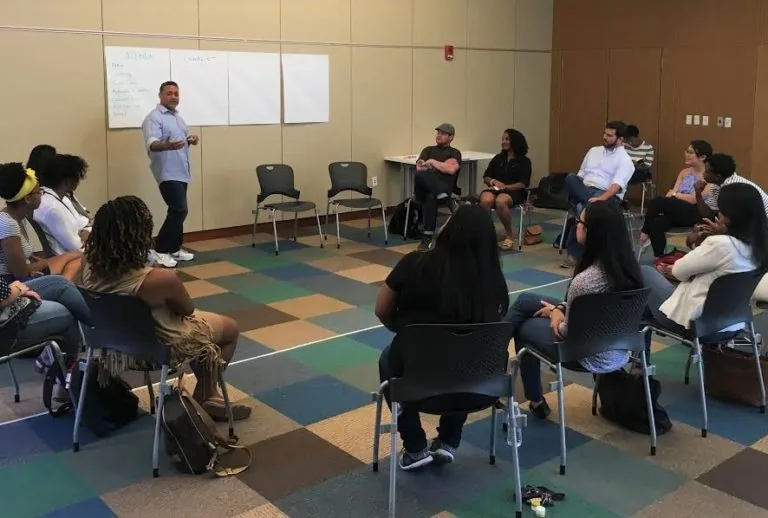
Mediation is a voluntary and confidential process. You and the other participants work with two neutral, nonjudgmental mediators to understand what matters to everyone at the table and to build your own lasting solutions.
Community Mediation DC provides mediation at times and locations convenient for all. Conversations are facilitated by volunteer mediators who reflect the diversity of our community.
Voluntary
Mediation is voluntary for everyone involved. Each person chooses whether to take part.
Confidential
What is said in the room stays in the room, and mediators do not share what they hear. Your mediators explain how confidentiality works before the session begins.
Neutral mediators
Trained community volunteers who reflect the diversity of DC. They stay neutral and nonjudgmental and help everyone understand what matters.
Your decisions
Participants speak for themselves and make their own decisions throughout. Mediators never impose an outcome.
Disclaimer: Mediation is not legal representation, therapy, or arbitration. No outcome is guaranteed or imposed.
What a session looks like
- Explaining the process
Your mediators introduce themselves, explain their neutral role, and agree on ground rules with everyone. - Talking about the situation
Each person shares their perspective, uninterrupted. Everyone is heard. - Building a list of topics
Together you decide which issues to work through, in your own words. - Brainstorming solutions
You explore options and what matters most to each person at the table. - Writing an agreement
If you reach one, the mediators write down your agreement. Your words, your solution.
Mediation can help with
Everyday conflicts
- Neighborhood and civic association disputes
- Workplace issues between co-workers, or supervisors and employees
- Roommate, housemate, landlord, and tenant disagreements
- Family conflicts, including parent-teen and co-parenting challenges
Community and support
- Collaborative planning for justice-involved individuals and their support people
- School disputes and interpersonal differences
- Disputes between local businesses and residents
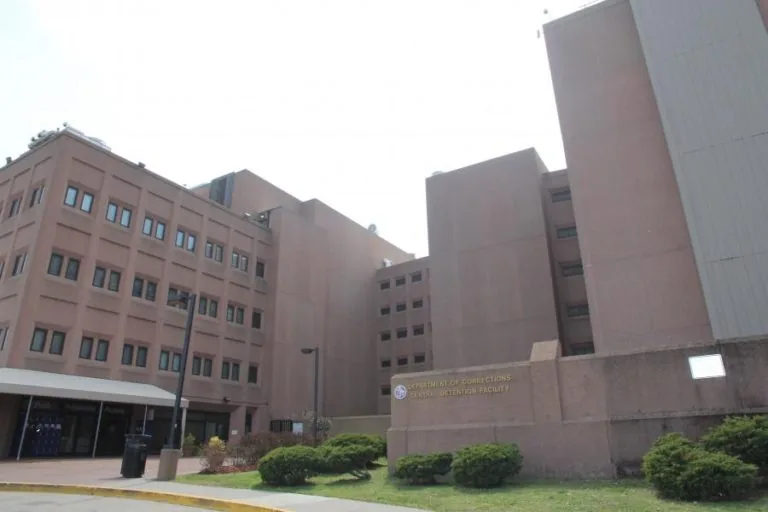
At the DC Jail and across DC
Reentry Mediation
Justice-involved individuals and their support people meet with two nonjudgmental mediators before release. These mediators facilitate open, honest conversations to help them resolve conflict and prepare for the transition home.
Reentry mediations are offered at the DC Jail and for returning citizens throughout DC.
Workshops
Workshops
We provide education about managing conflict through workshops and presentations for community groups, religious institutions, schools, government agencies, and other organizations. Interactive activities teach and reflect on conflict styles, effective communication, inclusive listening, and the mediation process.
- Conflict styles
- Effective communication
- Inclusive listening
- The mediation process
Introductory sessions
Offered online.
Customized trainings
Online or at a DC location, for a fee.
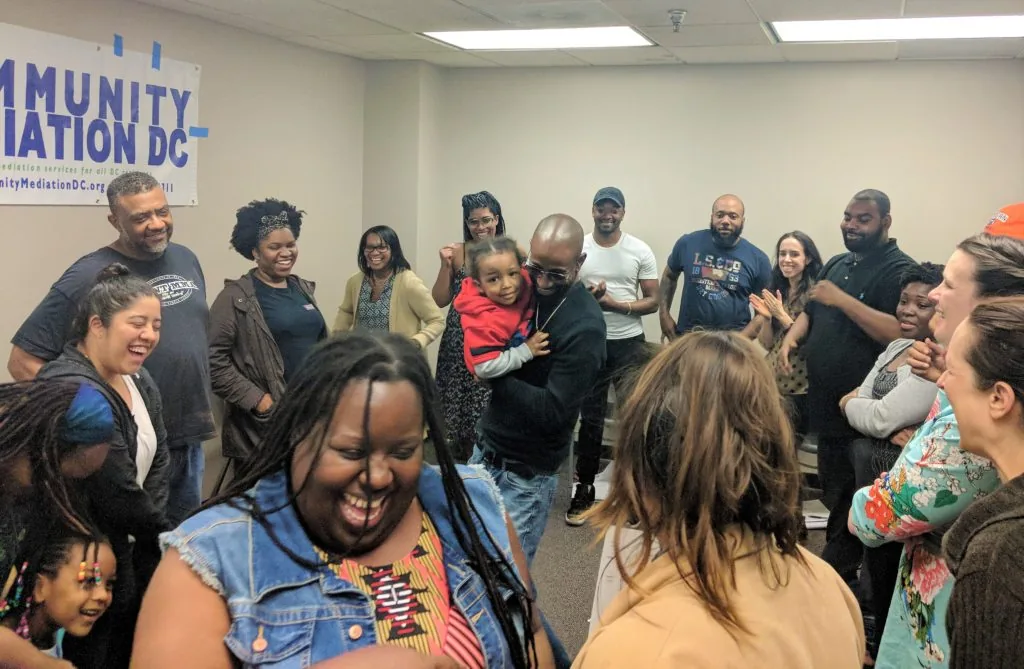
Learn to mediate
Mediation Training
Community Mediation DC offers Basic Mediation Training to community members in exchange for committing to 175 volunteer hours over two years. These hours include observing mediations, co-mediating, supporting outreach, and administrative support.
Basic
Mediation Training
175 hours
Volunteer commitment over two years
7 to 8 hours
About how much time each month
Once a year
About how often training is held
We currently only offer mediations in the Inclusive Mediation Model, so this training is required for anyone interested in volunteering with this part of our work. Training is held about once a year, depending on caseload, and current volunteers are prioritized.
Still deciding?
Not sure which service fits?
Reach out to the team. We will help you think through the next step.